Note: This is a provisional (unofficial) English translation of the Japanese page published on our Japanese site (Japanese original). The Japanese original takes precedence. The translation may be revised without notice.
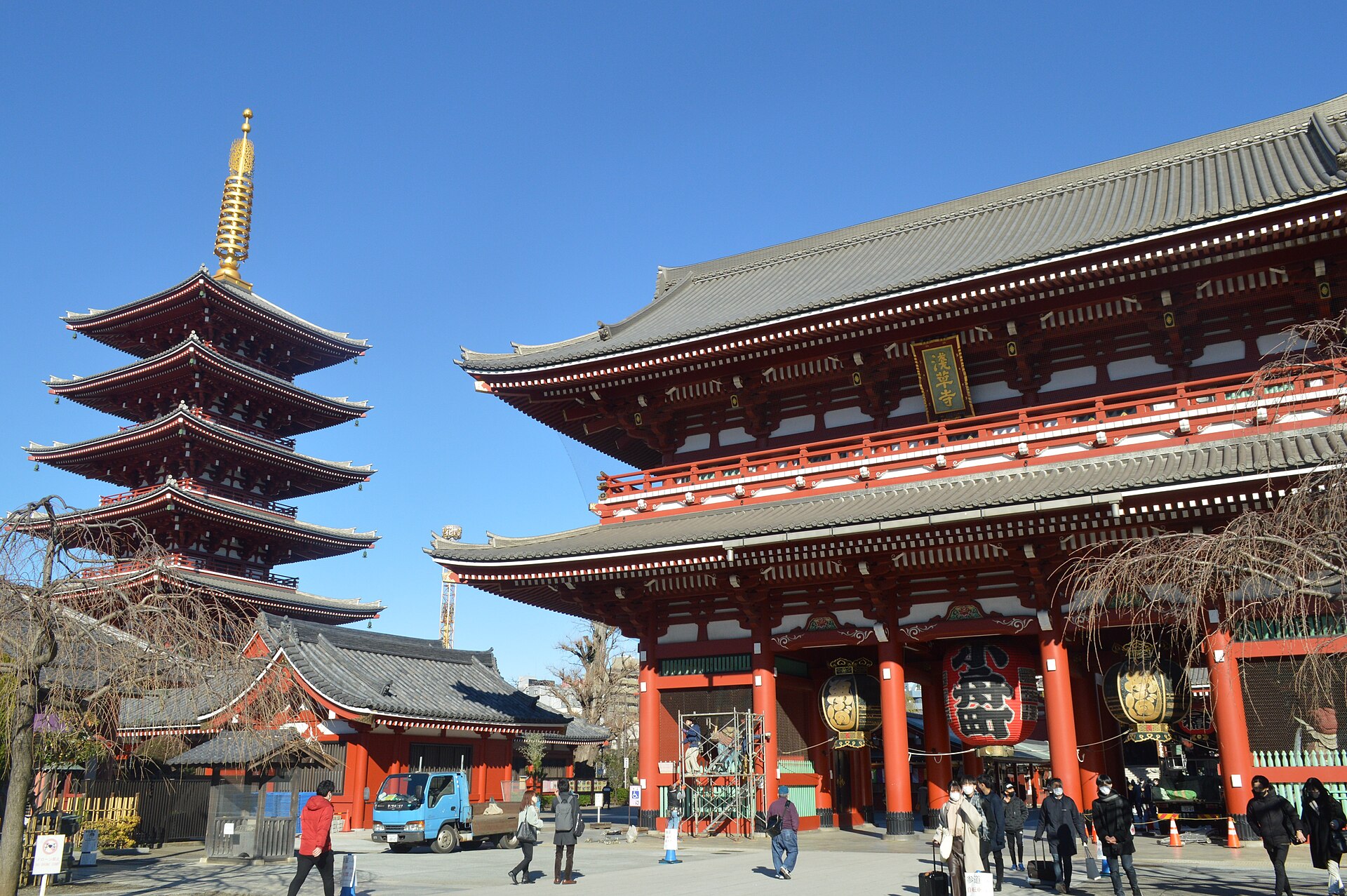
Kinryu-zan Senso-ji (金龍山 浅草寺) is a temple in Taito Ward, Tokyo. This article covers its sect, principal image, history, access and more.
Basic information
| Temple name | Kinryu-zan Senso-ji |
|---|---|
| Mountain name (sango) | Kinryu-zan |
| Sect | Shokannon sect |
| Principal image (honzon) | Sho Kannon Bosatsu (hidden image, hibutsu) |
| Address | 2-3-1 Asakusa, Taito Ward, Tokyo |
Faith and benefits
Kannon is said to grant benefits for all kinds of wishes, and Senso-ji is considered one of the top power spots in Tokyo.
History
- 628 (Suiko 36): Hinokuma no Hamanari (檜前浜成) and his brother Takenari (竹成) caught a statue of Kannon in their net while fishing in the Sumida River (Edo-ura). According to tradition, the statue was enshrined here, which marks the beginning of the temple.
- 645 (Taika 1): Shokai Shonin (勝海上人) is said to have built a Kannon hall on this site. Following a revelation in a dream, he designated the principal image a hidden image.
Visiting guide (fees, hours, parking, etc.)
| Admission fee | Free of charge. |
|---|---|
| Visiting hours | The main hall and other buildings: 6:00–17:00 from April to September, and 6:00–16:30 from October to March. The grounds are open 24 hours. |
| Goshuin (temple seal) | 8:00–16:30. Goshuin are available for the principal image and for Daikokuten, one of the Asakusa Meisho Seven Lucky Gods. They are issued at Eiko-do on the west side of the main hall. |
| Parking | The temple has no parking lot. Visitors use nearby parking, such as the Taito Ward Kaminarimon Underground Parking. |
This guide is based on information from each source as of September 19, 2026. Fees, hours and events may change. Please check the latest information with the temple or tourism association before visiting.
Access and map
Other temples in Tokyo
- Zojo-ji (増上寺)
- Kan-ei-ji (寛永寺)
- Jindai-ji (深大寺)
- Shibamata Taishakuten (柴又帝釈天)
- Sengaku-ji (泉岳寺)
- Gokoku-ji (護国寺)
For ancestor researchers
If you are looking for a family temple (bodai-ji) or a necrology register (kakocho), see also the list of temples in Tokyo (by municipality).